Your Inner Identity Becomes the Lens Through Which You Move Through the World

Most of us are waiting for something to happen before we let ourselves feel different.
We tell ourselves we will feel confident when we lose the weight, get the job, meet the right person, make more money, stop feeling anxious, or finally become more disciplined.
But what if you did not have to wait?
What if confidence was something you could choose before the evidence showed up?
What if you could wake up tomorrow and decide that you are done seeing yourself through the same old story?
Choosing differently does not require your life to look different first. It starts with deciding that the way you see yourself can change now.
And sometimes that decision is the beginning of everything else.
The story you repeat starts to feel like the truth
Think about the things you say about yourself without even questioning them.
I am shy.
I always overthink.
I never stick to anything.
I am terrible with money.
I just do not have confidence.
At first, these are thoughts. After enough repetition, they can start to feel like identity.
That matters because identity can influence behavior. Research looking at identity and behavior has found that the way people see themselves is linked with what they intend to do and how they behave, although the relationship is shaped by many other factors too.
If you have spent years telling yourself you are not confident, you may start making decisions from that belief without realizing it.
You might stay quiet when you have something to say. You might assume somebody else knows better. You might talk yourself out of an opportunity before anyone else has had the chance to say no.
Eventually, life starts reflecting back the identity you already carried into it.
So ask yourself something simple:
Who did I decide I was, and when did I decide it?
You may realize you are still living from a conclusion you made years ago.
Maxwell Maltz called this your self image
In Psycho Cybernetics, first published in 1960, Maxwell Maltz wrote extensively about what he called the self image, the internal picture you carry of who you are.
Maltz was a plastic surgeon before becoming known for his work in self development. He became interested in patients whose physical appearance had changed through surgery, but whose insecurities sometimes remained. That observation helped shape his belief that changing the outside does not automatically change the picture someone carries of themselves internally.
That idea is worth sitting with.
You can change jobs and still feel incapable. You can enter a loving relationship and still expect rejection. You can change your body and still speak to yourself exactly the same way. You can achieve something you once desperately wanted and immediately move the finish line again.
Sometimes the outside changes before the identity does.
Neville Goddard asked people to reverse the order
Neville Goddard approached identity from a spiritual perspective.
Rather than waiting for the outside world to change before allowing yourself to feel different, his teachings centered on assumption. He encouraged people to imagine from the state they wished to experience and to become familiar with that state internally.
For someone who has spent years waiting to feel ready, that idea can be incredibly freeing.
Instead of waking up and asking:
Do I feel confident today?
You can decide:
Today, I choose confidence.
You do not need someone else to validate the choice first. You do not need a perfect morning. You do not need your life to look different before you begin relating to yourself differently.
You are allowed to choose a new identity before it feels natural
We often assume a new identity has to arrive on its own. We think we should wait until we genuinely feel secure before calling ourselves confident, or until we have months of consistency behind us before seeing ourselves as disciplined.
But you are allowed to choose the direction first.
Maybe you have spent years thinking, “I am insecure.” You can decide, “I am no longer going to build my identity around insecurity.”
Maybe you have been saying, “I cannot trust myself.” You can choose, “I am becoming someone who trusts herself.”
Maybe you have spent years criticizing your body. You can choose, “I am not going to spend another year at war with myself.”
You do not need anyone else’s permission for any of those decisions.
What do you have to lose by loving yourself?
Really. Think about it.
What do you lose by deciding that you are worthy now? What do you lose by speaking to yourself with kindness instead of criticism? What do you lose by assuming there is more available to you than what you have experienced so far?
Nothing.
You can still want more for your life. You can still grow, change, and challenge yourself. Loving yourself can become the foundation you grow from, rather than the reward you finally earn after becoming someone else.
There is a huge difference between trying to improve your life because you believe you are not enough and improving your life because you care about yourself.
Your imagination is already working
Neville Goddard talked constantly about imagination because, in his view, it was central to creation.
You are already using imagination all day. You imagine conversations before they happen. You picture how people might respond. You replay something embarrassing from years ago. You imagine what could go wrong before anything has even happened.
So the question is not whether you use imagination. You already do. The question is what you are using it for.
Science gives us another reason to take imagination seriously. A meta analysis of 123 experimental effects involving 5,685 participants found that mental simulation had a positive effect on later behavior. In simple terms, mentally rehearsing a future action can influence what people go on to do.
That fits beautifully with the spiritual practice of becoming familiar with a new identity before it feels fully natural.
When you repeatedly imagine yourself as confident, calm, loved, capable, or secure, you are giving your mind a different picture to work with. You are no longer rehearsing the same old story.
Imagine from the identity, not just the outcome
Instead of picturing a perfect life and watching yourself from the outside, try experiencing a few moments as the person you want to be.
If you chose confidence, what would it feel like to wake up without immediately picking yourself apart?
If you chose self trust, what would it feel like to make a decision and not reopen it ten times?
If you chose love, what would it feel like to stop assuming you have to earn it?
You do not need a 45 minute meditation. You could do this for two minutes before you get out of bed. Let your mind experience something different from its usual script.
Not because you are forcing yourself to believe something fake. Because you are giving yourself permission to imagine another possibility.
Science gives us another reason to take identity seriously
Psychologists studying future selves have found that the relationship between who we imagine becoming and what we do now is meaningful. Research suggests that a future identity can influence present motivation, especially when that future self feels relevant to current choices.
You are not trying to admire some distant perfect person. You are bringing that identity closer.
This is me too.
Maybe not fully expressed yet. Maybe not reflected everywhere around you yet. But still available.
You do not have to earn the right to begin again
There are people who will read this while feeling motivated and ready to make huge changes. There are also people who will read it from bed because life has been heavy lately.
This is for both.
If you have energy, maybe choosing a new identity inspires you to do something differently today.
If you do not, your choice still counts.
Maybe today your new identity looks like getting out of bed and showering. Maybe it looks like forgiving yourself. Maybe it is deciding that you are not going to call yourself lazy because you are struggling. Maybe it is allowing yourself to believe your life can feel different even if you do not know how yet.
You do not need to transform everything today. You can simply stop agreeing with the idea that nothing can change.
That is a beginning.
Choose who you are going to be
Take a minute and answer this honestly:
What identity am I ready to stop carrying?
Maybe:
I am always anxious.
I am unlucky in love.
I am not attractive.
I never have enough.
I cannot trust myself.
I am behind.
Now ask:
What am I choosing instead?
Keep it simple.
I choose confidence.
I choose self trust.
I choose abundance.
I choose health.
I choose love.
I choose peace.
I choose to like myself.
You do not have to explain it to anyone. You do not have to wait for it to feel completely true.
Choose it.
Then begin noticing when your mind tries to pull you back into the old identity. You do not have to fight the thought. You can simply respond:
That is not the story I am choosing anymore.
Let yourself become familiar with something better
Neville called this assumption. Maltz spoke about changing the self image. Modern psychology talks about identity, possible selves, expectations, and mental simulation.
They are not all saying exactly the same thing, and we should not pretend they are.
But each, in a different way, asks us to take seriously the picture we hold of ourselves.
Because you live with that picture every day. You bring it into relationships. You carry it into rooms before anyone has said a word. You interpret your life through it.
So why not choose that picture with more care?
Why not decide that the person looking back at you is someone you are going to support instead of constantly correct?
Why not wake up tomorrow and choose confidence simply because you are tired of choosing against yourself?
You have nothing to lose by loving yourself.
Maybe change can begin much more simply than we make it.
A thought. A decision. A new assumption.
I am allowed to be different now.
And then you live your day from there.
This article is for educational and inspirational purposes. Spiritual teachings are presented as spiritual and self development perspectives, while scientific claims are supported by the sources below.
Read more
The books behind this post
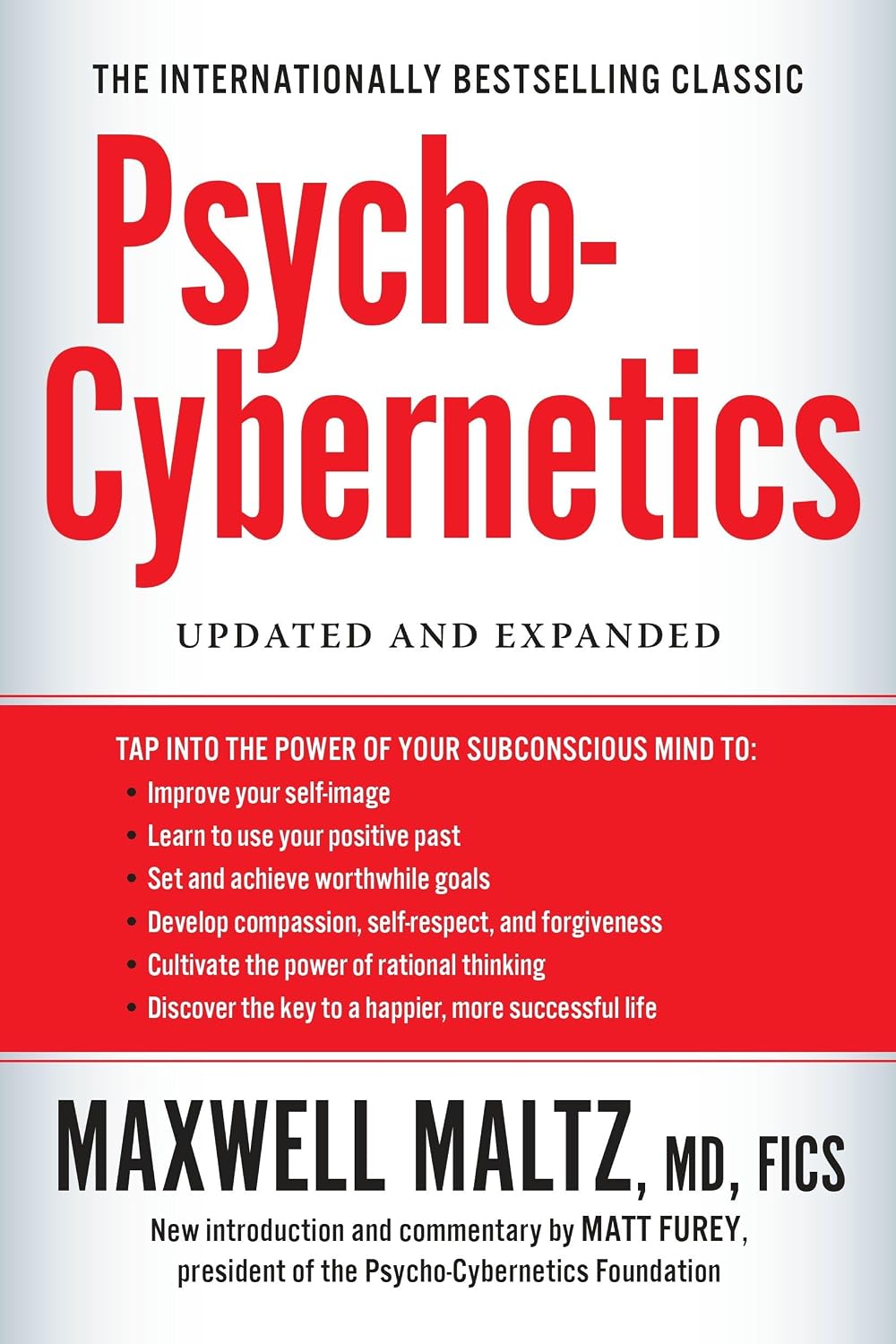
Psycho-Cybernetics
The classic on self-image and how the picture you carry of yourself shapes what you do.
Buy now
The Neville Goddard Deluxe Collection
Neville’s lectures and books in one volume, on imagination and assumption.
Buy nowSome links are affiliate links, meaning AÏA may earn a small commission at no extra cost to you.
Sources
- Maxwell Maltz. Psycho Cybernetics. Originally published in 1960. Current edition by TarcherPerigee, Penguin Random House. Background on Maltz’s self image framework, visualization, and mental rehearsal.
- Neville Goddard. Imagining Creates Reality and related lectures. Included as a spiritual philosophy on assumption, imagination, and identity.
- Oyserman D, Horowitz E. From possible selves and future selves to current action: An integrated review and identity based motivation synthesis. Advances in Motivation Science. 2023.
- Rebar AL, et al. The Role of Identity in Human Behavior Research: A Systematic Scoping Review. Identity. 2023.
- Cole SN, Smith DM, Ragan K, Suurmond R, Armitage CJ. Synthesizing the effects of mental simulation on behavior change: Systematic review and multilevel meta analysis. Psychonomic Bulletin & Review. 2021.