Why Every Woman Should Be Strength Training
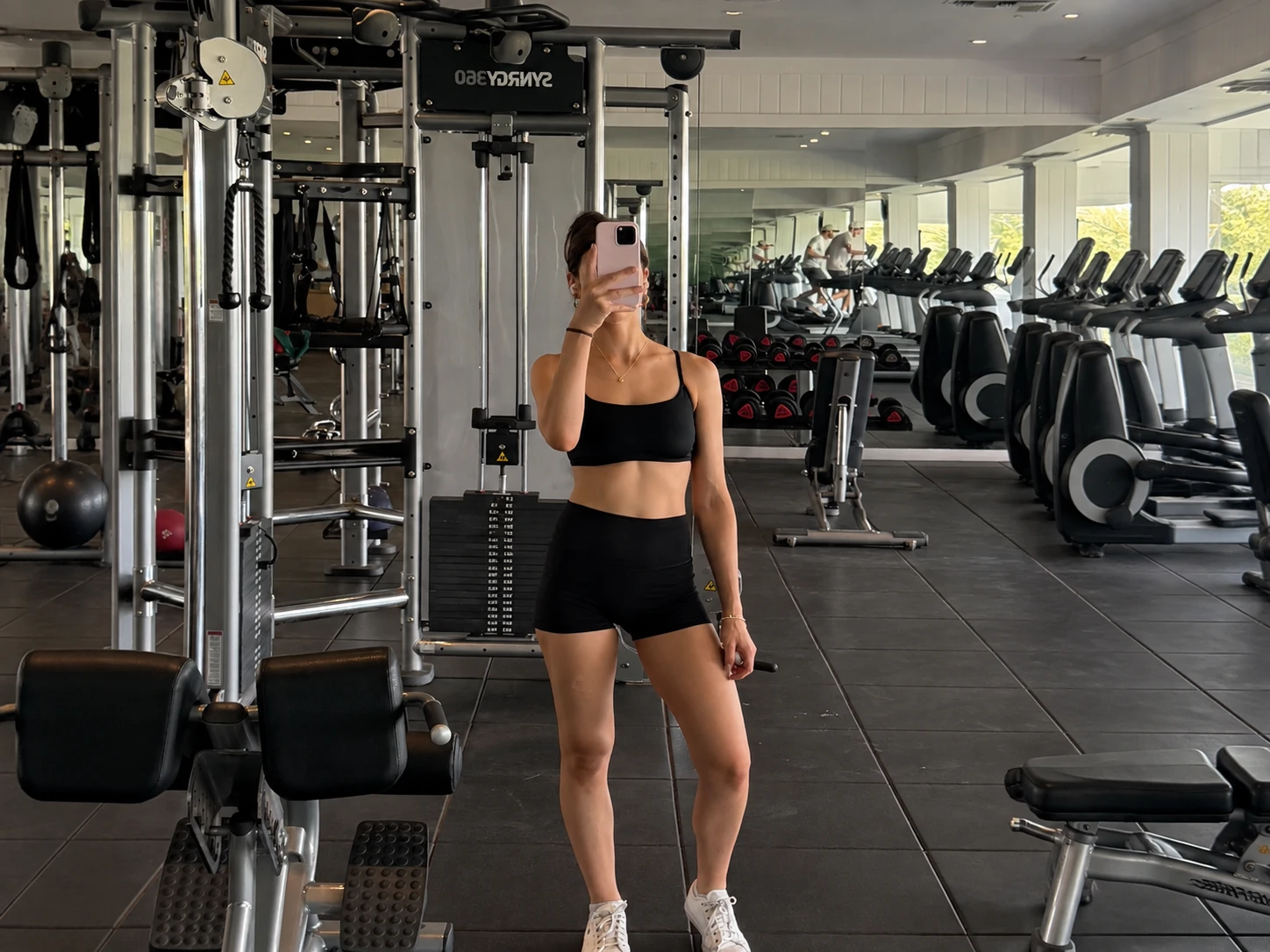
If strength training is still the part of your workout you skip, it may be the part your body needs most.
You do not have to want bigger muscles. You do not have to love the gym. And you definitely do not need to train like a bodybuilder.
Strength training matters because muscle affects how well you move, how strong your bones stay, how your body handles glucose, and how much physical independence you keep as you get older. Current physical activity guidelines recommend muscle strengthening work at least two days a week for adults, alongside aerobic activity.1
Muscle is not just about how your body looks
The most obvious result of lifting weights is getting stronger, but that is only part of why it matters.
A recent systematic review and meta analysis looking at resistance training across the female lifespan found that it improves muscular strength and body composition in healthy adult women.2 Research in postmenopausal women also shows clear improvements in upper and lower body strength with resistance training.3
That strength shows up outside the gym. Carrying groceries, lifting luggage, getting up from the floor, moving furniture, climbing stairs, and eventually staying independent all require muscle.
You will naturally lose some muscle and strength with age if you do nothing to challenge it. Strength training gives your body a reason to keep more of it.
Your bones need resistance too
Women have an extra reason to care about strength training: bone health.
Bone is living tissue. It responds to the forces placed on it. Resistance training creates muscular force against bone, which is one reason muscle strengthening exercise is included in public health guidance for bone health.4
This becomes especially important after menopause, when bone loss can accelerate as estrogen levels fall.
A 2025 meta analysis of 17 randomized trials involving 690 postmenopausal women found that resistance training improved bone mineral density at the lumbar spine, femoral neck, and total hip.5 The exact result depends on the program, intensity, and the person, but the direction is useful: loading your body is part of protecting it.
You do not have to wait until bone density becomes a concern. Building strength earlier gives you more to work with later.
More muscle also helps your body handle glucose
Your muscles use glucose for energy. When you challenge them regularly, you are not only training them to become stronger. You are also changing how they take up and use fuel.
A 2024 systematic review and meta analysis found that resistance training can improve measures of glucose regulation, including insulin sensitivity, although the size of the effect varies between studies and populations.6
This does not make weight training a cure for insulin resistance or diabetes. It does make muscle an important part of metabolic health.
Cardio is great. It just does a different job
Walking, running, cycling, and other forms of cardio are excellent for your heart and overall health. You do not need to choose between cardio and strength training.
But they are not interchangeable.
The current guidelines specifically recommend both aerobic activity and muscle strengthening because they create different adaptations in the body.1
The same applies to Pilates and yoga. Some sessions can absolutely challenge your muscles enough to count as strengthening work. The question is whether the exercise is becoming difficult enough that your muscles have to adapt. Public health guidance defines effective muscle strengthening work as activity that challenges the major muscle groups to the point where another repetition would be difficult.4
If the resistance never gets harder, your body eventually gets very good at doing the same thing.
You need much less than you think
This is the part that makes strength training easier to start.
You do not need five gym days a week.
The current recommendation for adults is at least two days of muscle strengthening work each week.1 The federal guidelines note that one set of 8 to 12 repetitions per exercise can improve strength, while two or three sets may produce greater gains.4
A simple full body session can cover a lot. Think about movements that train your legs, hips, back, chest, shoulders, arms, and core. Squats or leg presses. A hip hinge such as a deadlift variation. A row. A press. A pull down. Something for your core.
The weight should feel challenging by the end of the set while your form stays controlled. As you become stronger, gradually increase the weight, repetitions, or difficulty. That gradual progression is what keeps giving your muscles a reason to adapt.4
Start before you think you need to
It is easy to think of strength as something you can worry about later.
But muscle and bone are much easier to maintain when you have spent years building them.
That is the real reason every woman should consider strength training. Not because everyone needs to look muscular. Not because cardio is not enough. Not because you need another thing to optimize.
You are building a body that still works for you years from now.
If you are completely new, start with two full body sessions a week. Learn a few basic movements. Use a weight you can control. Let yourself be a beginner.
The goal is not to leave the gym destroyed. The goal is to get a little stronger over time.
That strength is something your future self gets to keep.
This article is for informational purposes only and is not medical advice. If you are pregnant, recovering from injury or surgery, or have a health condition that affects exercise, ask a qualified health professional what type of training is appropriate for you.
Sources
- CDC. Adult Activity: An Overview. Current guidance recommends at least two days of muscle strengthening activity each week for adults.
- It’s never too late: The impact of resistance training on strength and body composition in females across the lifespan. Systematic review and meta analysis, 2026.
- González Gálvez N, Moreno Torres JM, Vaquero Cristóbal R. Resistance training effects on healthy postmenopausal women: a systematic review with meta analysis. Climacteric. 2024.
- U.S. Department of Health and Human Services. Physical Activity Guidelines for Americans, Second Edition. Muscle strengthening guidance and resistance training recommendations.
- Optimal resistance training parameters for improving bone mineral density in postmenopausal women: a systematic review and meta analysis. 2025.
- Paquin J, et al. Resistance training, skeletal muscle hypertrophy, and glucose homeostasis: how related are they? A systematic review and meta analysis. Applied Physiology, Nutrition, and Metabolism. 2024.