Why Walking Might Be the Most Underrated Wellness Habit
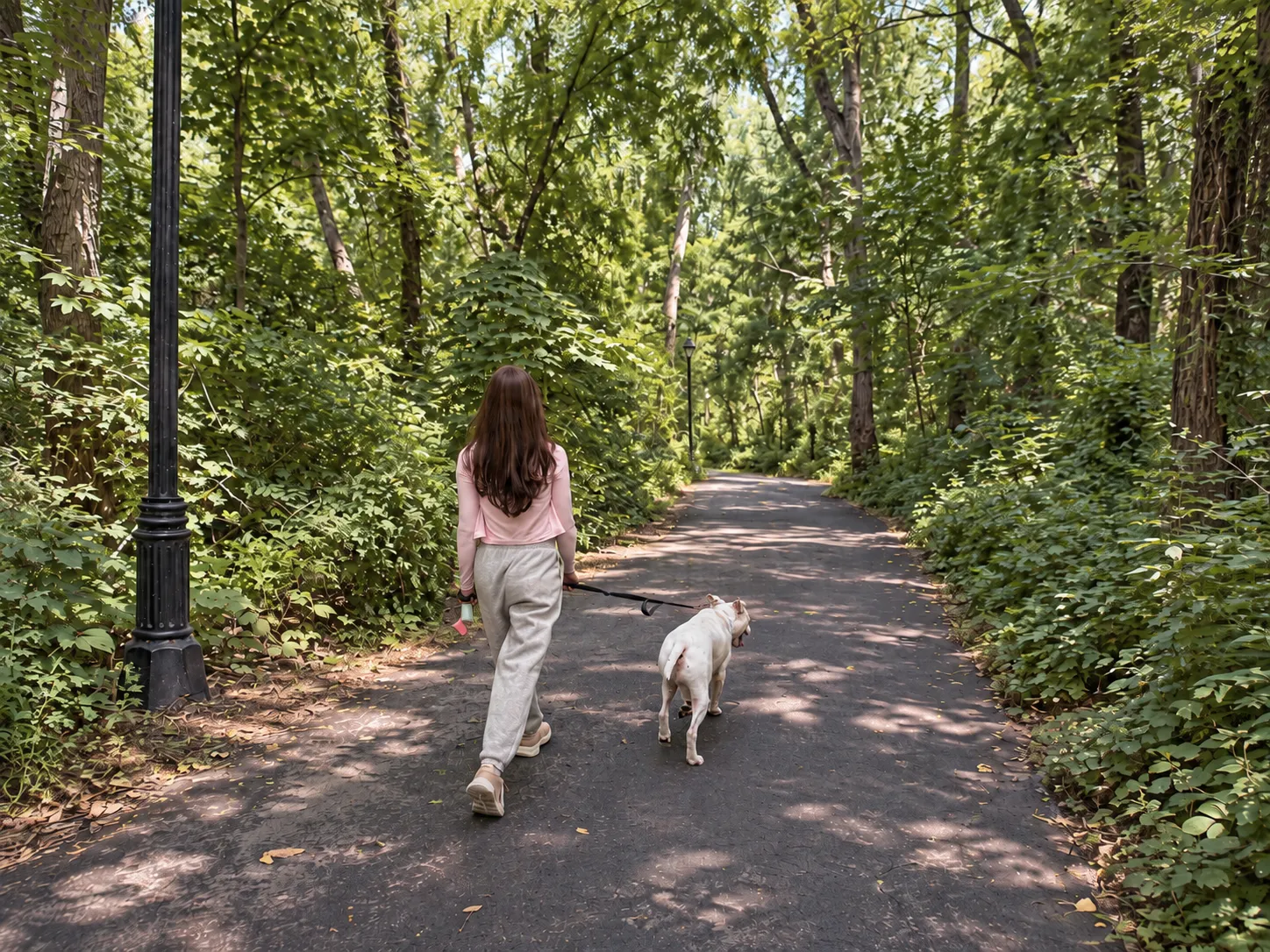
There are days when the answer is not another supplement, a harder workout, or another hour spent thinking about the same thing.
Sometimes you just need to go for a walk.
Walking is easy to underestimate because it does not feel intense enough to count as exercise. There is no equipment, no class to book, and no real learning curve. You can do it after dinner, with your dog, between meetings, while catching up with a friend, or completely alone.
Yet regular walking supports several parts of health at once. It contributes to cardiovascular fitness, daily energy expenditure, blood sugar control, mood, and mental wellbeing. Physical activity more broadly is also associated with better sleep and a lower risk of conditions including heart disease, stroke, and type 2 diabetes.¹
That is a lot of return from something you can start with ten minutes.
Walking counts, even if it does not feel like a workout
A lot of us have absorbed the idea that movement only counts when it feels difficult. If you are not sweating heavily or leaving a workout exhausted, it can seem like you did not really do much.
Your body does not work that way.
Brisk walking qualifies as moderate intensity physical activity, and current guidelines recommend at least 150 minutes of moderate activity each week for adults, alongside muscle strengthening work.²
Walking can also support weight management because it increases how much energy you use during the day. The CDC notes that physical activity can help with maintaining a healthy weight and can support weight loss when it is paired with an eating pattern that creates an energy deficit.³
The useful part is how easy walking is to repeat. A 20 or 30 minute walk can fit into an ordinary day without requiring the recovery that comes with harder training. On a busy week, that consistency can matter more than chasing a perfect workout plan.
Your mind benefits too
If you have ever gone for a walk feeling overwhelmed and come back with a clearer head, that feeling has some research behind it.
A 2024 systematic review and meta analysis looked at 75 randomized trials involving more than 8,600 participants. Walking was associated with reductions in depressive and anxiety symptoms compared with inactive control groups, across indoor, outdoor, individual, and group walking.⁴
A walk can pull you out of the same thought pattern long enough to see the situation differently. You are moving, taking in new surroundings, and giving your attention somewhere else to go for a while. That small shift can be enough to loosen the grip of a thought you have been circling for the last hour.
Walking is not a replacement for therapy, medication, or other mental health care when those are needed. It is simply one accessible way to support your mental wellbeing alongside whatever else helps you.
Some of the best thinkers in history walked for a reason
Walking and thinking have been linked for a very long time.
Friedrich Nietzsche famously wrote that great thoughts are conceived while walking. More than a century later, researchers at Stanford tested the idea in a series of experiments and found that walking increased creative idea generation compared with sitting. The effect was especially strong for divergent thinking, the kind of thinking involved in coming up with different possibilities rather than one fixed answer.⁵
A 2026 systematic review and meta analysis reached a similar conclusion. Across 23 studies involving more than 1,000 participants, walking had a large positive effect on divergent thinking.⁶
Steve Jobs was also well known for taking walking meetings when he wanted to talk through ideas. That habit makes intuitive sense when you consider the research: sometimes sitting in front of the same screen and trying harder is not what your brain needs.
If you are stuck on a decision, an idea, or a problem at work, try taking the question with you on a walk. You do not have to force an answer. Let your mind move while your body does.
There is a spiritual side to walking too
Walking can become one of the easiest ways to come back to yourself.
You notice the air, the light, the people around you, the sound of your own footsteps. Your attention gets pulled out of the screen and back into the world you are actually standing in.
For some people, that becomes prayer. For others, it is where they visualize, think about what they want next, practice gratitude, or simply let their mind become quieter.
You do not need to turn every walk into a meditation practice. Sometimes the most useful thing is to leave a little space for your own thoughts instead of filling every minute with a podcast, music, or notifications.
If you are someone who tends to think in circles when you are stressed, try one walk without anything in your ears. You may be surprised by what surfaces once you stop feeding your mind new information.
A short walk after a meal is worth knowing about
Walking has another practical benefit that has nothing to do with calories.
Your muscles use glucose when they move, which is one reason physical activity can help with blood sugar management. The CDC recommends starting with simple activity, such as a 10 minute walk after dinner, for people working on becoming more active with diabetes.⁷
You do not need to turn every meal into a fitness routine. A short walk after dinner can simply become part of the evening, especially if you would normally sit down immediately afterward.
You do not need a perfect step count
Ten thousand steps is a useful target for some people, but it is not a magic line where walking suddenly starts working.
Health benefits begin below that number, and step count research suggests that more walking is generally associated with lower mortality risk, with the curve beginning to level off at different ranges depending on age.⁸
If you currently walk very little, ten minutes is a perfectly reasonable place to start. Add a walk after dinner. Take one phone call outside. Walk around the block before sitting back down to work. If tracking steps motivates you, use it. If it turns walking into another number to obsess over, you do not need it.
Make walking something you actually use
Walking works best when it becomes part of your real life rather than another wellness rule you are trying to follow perfectly.
Use it when you need movement but do not have the energy for a hard workout. Use it when your head feels crowded. Use it when you are stuck on an idea. Use it when you want to spend time with someone without sitting across a table. Use it when you need ten minutes to yourself.
You do not need every walk to have a purpose, either. Some can just be walks.
The next time you are debating whether a walk is 'enough,' remember that it does not need to replace strength training, solve every problem, or completely change your mood. It can simply be one of the easiest ways to do something good for your body and your mind at the same time.
When you feel stuck, foggy, restless, or disconnected from yourself, take the walk. See what changes.
This article is for informational purposes only and is not medical advice. If you have a health condition that affects exercise or mobility, speak with a qualified healthcare professional about what level of activity is appropriate for you.
Sources
- Centers for Disease Control and Prevention. Health Benefits of Physical Activity for Adults.
- Centers for Disease Control and Prevention. Adult Activity: An Overview. Current guidance recommends at least 150 minutes of moderate intensity activity per week plus muscle strengthening on two days.
- Centers for Disease Control and Prevention. Physical Activity and Your Weight and Health.
- Xu Z, et al. The Effect of Walking on Depressive and Anxiety Symptoms: Systematic Review and Meta Analysis. 2024.
- Oppezzo M, Schwartz DL. Give Your Ideas Some Legs: The Positive Effect of Walking on Creative Thinking. Journal of Experimental Psychology: Learning, Memory, and Cognition. 2014.
- The impact of walking on creative thinking: A systematic review and meta analysis. 2026.
- Centers for Disease Control and Prevention. Get Active. Diabetes and physical activity guidance, including the example of a 10 minute walk after dinner.
- Paluch AE, et al. Daily steps and all cause mortality: a meta analysis of 15 international cohorts. The Lancet Public Health. 2022.