Why Being Near the Ocean Can Change How You Feel
How deeply connected humans are to water, why it can feel therapeutic, and the questions water crystal research leaves us with.
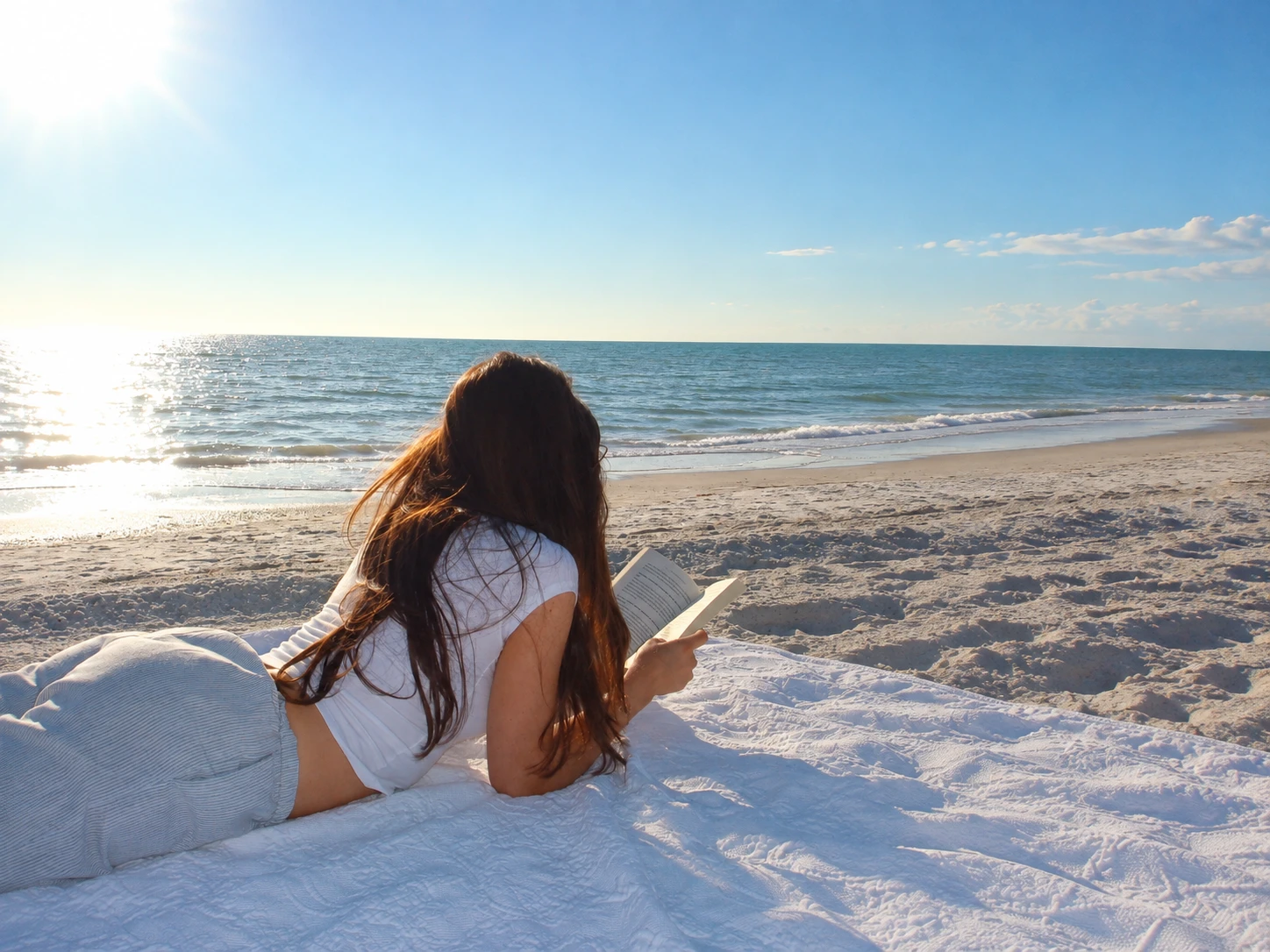
We go to water when we want to feel better.
We take long showers after difficult days. We sit beside the ocean when our minds feel crowded. We play rain sounds to fall asleep. We swim when we want to feel refreshed.
That instinct is so common that it is easy to overlook.
Researchers use the term blue space for environments where water is a major feature, including oceans, lakes, rivers, and coastlines. A 2026 systematic review found that greater exposure to blue spaces, particularly saltwater environments, was associated with better general mental health, greater wellbeing, and lower depression in the studies reviewed.
Even the sound of water appears to affect us. In a 2023 laboratory study, participants listened to different nature sounds after a stressful task. Water sounds were associated with better cortisol recovery.
Water changes the state you are in
Water gives us a different sensory environment from the one most of us spend the day in.
There is natural sound, open space, movement, fresh air, less visual clutter, and fewer demands competing for attention.
Coastal environments seem to bring several of those effects together at once, which may be part of why they feel so restorative. What people often describe as “feeling better by the ocean” is likely the result of several things happening at the same time.
For some people, that feels like calm. For others, it feels like clarity, perspective, or simply being more present.
We are physically connected to water
Around 50 to 60 percent of the adult human body is water.
It is part of our blood, muscles, organs, tissues, and cells. Every major system in the body depends on it.
That makes our relationship with water more than symbolic. We are constantly interacting with something that is also a major part of us.
Water has always been used for renewal
Across cultures and religions, water appears in practices connected with cleansing, rebirth, healing, purification, prayer, and new beginnings.
People immerse themselves in sacred rivers. They baptize with water. They wash before prayer. They use baths and springs as places of restoration.
Modern wellness did not invent the idea that water can help us reset. People have been using it that way for centuries.
There is something intuitive about using water when we want to mark a change in state, whether that change is physical, emotional, or spiritual.
Water can be therapy in ordinary life
You do not need an ocean vacation to use this.
If water reliably helps you feel calmer, use it on purpose.
Take the walk by the river. Sit by the lake when you need to think. Swim when you have access to it. Use rain or wave sounds when you want to relax. Take a bath without your phone. Let a shower become the point where one part of the day ends and another begins.
None of this has to become complicated. The useful part is noticing what changes your state and giving yourself more access to it.
If water helps, that matters.
Then there is the question of what water responds to
Masaru Emoto became known for photographing frozen water crystals after exposing water samples to different words, music, prayer, and intention.
His photographs showed striking differences. Water associated with words such as love, gratitude, and thank you was photographed forming intricate, symmetrical crystals. Other samples appeared much more irregular.
He also experimented with music. Different samples were exposed to different types of music before being frozen and photographed, again producing visibly different formations in his work.
The images became famous because they gave people a visual way to think about something much harder to see: whether the environment surrounding water might matter.
A 2006 double blind pilot study later tested one aspect of that idea. Approximately 2,000 people in Tokyo directed positive intention toward water samples located in California. The samples were frozen and photographed, and 100 independent judges, who did not know which samples had received the intention, rated the resulting crystals.
The crystals from the intention treated water received higher aesthetic ratings than the controls.
The 2006 study at a glance
Reported result: crystals from the intention-treated water received higher aesthetic ratings than the controls.
You do not need to believe every claim ever made about water crystals to take something valuable from this.
The idea itself is worth considering.
Water is already highly responsive to its environment. Temperature changes it. Minerals change it. Pressure changes it. Vibration moves through it.
Emoto’s work asks whether words, music, intention, and energy may belong somewhere in that conversation too.
Maybe we should be more intentional with water
This is where the science and the spiritual side of the subject can sit together without needing to compete.
Science shows us that blue spaces can support mental wellbeing and that water sounds can influence stress recovery.
Spiritual traditions have treated water as cleansing, renewing, and meaningful for thousands of years.
And the water crystal experiments raise questions about whether our relationship with water might be more sensitive to environment, sound, and intention than we usually think about.
So maybe the practical lesson is simply to interact with water a little more consciously.
Spend time near it when you can. Listen to it when you need calm. Swim when you need to come back into your body. Use showers and baths as real transitions instead of rushing through them. Bring music, prayer, gratitude, or intention into those moments if that feels meaningful to you.
You do not need a complicated ritual. You just need to notice that water already changes how you feel.
And once you see that, it becomes harder to treat it as background.
Maybe that is why humans keep returning to it. Not only because we need water to live, but because in ways we are still trying to understand, being near it seems to bring us back to ourselves.
This article is for educational and editorial purposes and is not medical advice. Associations between blue-space exposure and wellbeing do not establish that water environments treat a mental health condition. The water-crystal study discussed above was a pilot experiment and is presented as exploratory research.
Sources
- Wang Y, Jiang SY, Li Y. The protective role of blue space in mental health outcomes: A systematic review. Cities. 2026.
- Michels N, Hamers P. Nature Sounds for Stress Recovery and Healthy Eating: A Lab Experiment Differentiating Water and Bird Sound. Environment and Behavior. 2023;55(3):175–205.
- Brinkman JE, Dorius B, Sharma S. Physiology, Body Fluids. StatPearls. Adults are approximately 50–60% water by mass.
- World Health Organization Regional Office for Europe. Green and blue spaces and mental health: new evidence and perspectives for action. 2021.
- Radin D, Hayssen G, Emoto M, Kizu T. Double-blind test of the effects of distant intention on water crystal formation. Explore. 2006;2(5):408–411.
Hero image: AÏA Wellness original photograph. Study graphic: original AÏA visualization created from Radin et al. (2006); no third-party study photograph reproduced.